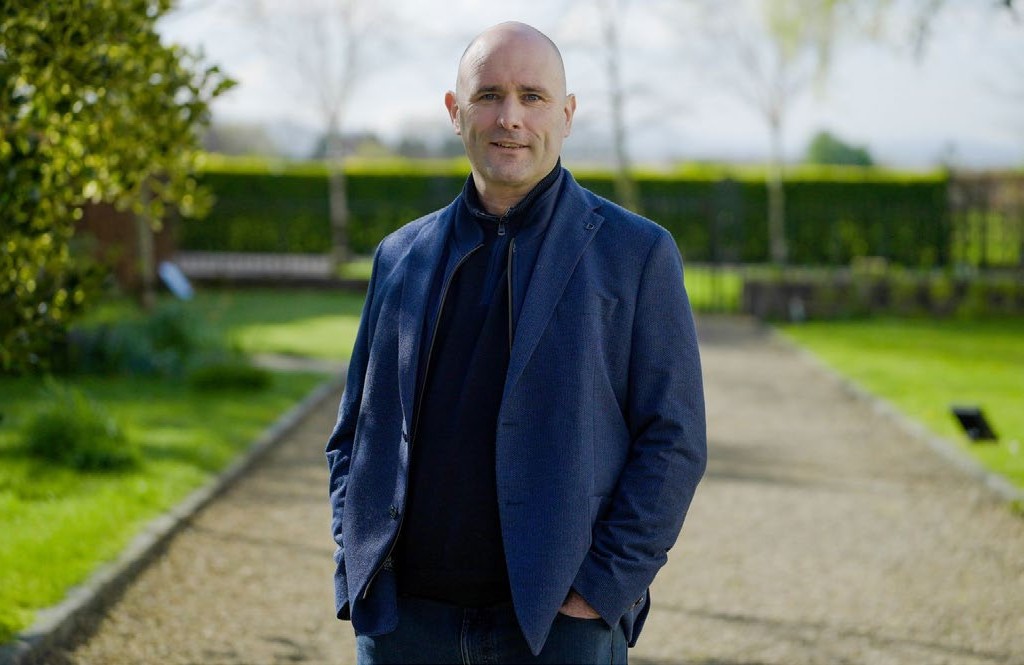
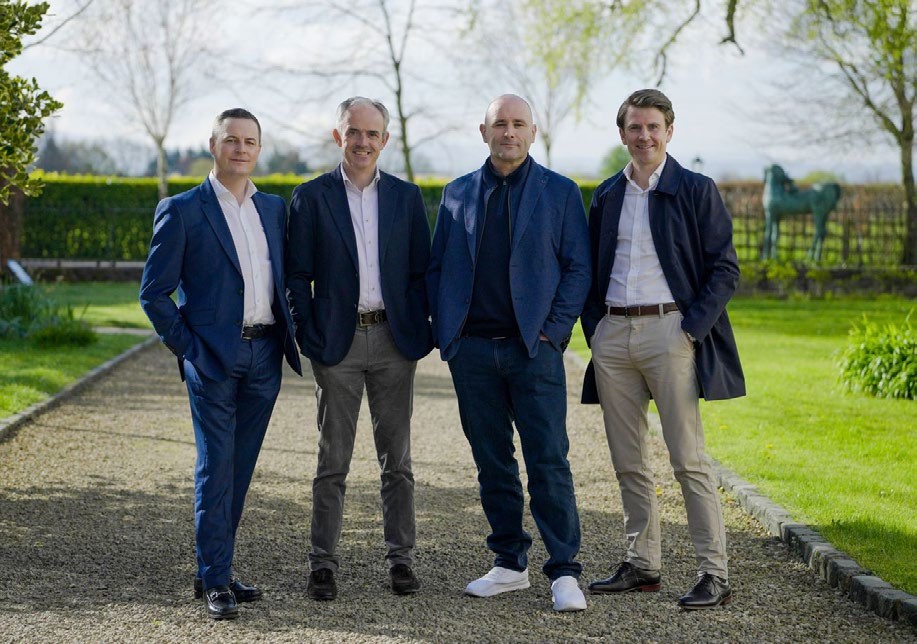
The launch of Complete Sports Management (CSM) earlier this year marked a personal and professional milestone for JP Wynne, a Tipperary-born accountant steeped in the culture of Ireland’s thriving horse-racing industry. Wynne established the sports management agency in Clonmel in May with partners Ruby Walsh, Emmet McNamara and Fran Berry, all former jockeys now working as racing analysts and media presenters.
CSM was created to give jockeys professional off-track support, ranging from day-to-day management and financial guidance to media advice and access to commercial opportunities, such as sponsorship deals.
The idea for the business grew out of Wynne’s experience running Wynne & Associates, an accountancy practice established in Clonmel in 2009.
“When I started Wynne & Associates, two of my earliest clients were a jockey and a trainer. I went on to set up Sports Tax in 2015 and by that stage I was working with 25 jockeys,” Wynne says.
“The racing industry is all about word-of-mouth. If you do a good job and solve problems for your clients, you’ll be busy.
“I’ve worked with professional flat, national hunt, apprentice and amateur jockeys for over twenty years.
“Irish jockeys are world-class but one big thing I noticed was that they weren’t getting the support they needed behind the scenes. There were a lot of gaps in areas like managing their accounts and financial planning.
“Fran, Ruby, Emmet and I all knew each other. We saw the gap in the market, so we came together, established the business and brought our affinity partners on board.”
Complete support package
CSM’s support services span financial planning, accounts and tax, insurance, media advice, group partnership deals and travel logistics.
“We give them the complete package – a full-spectrum off-track management service,” Wynne explains. “Whenever a jockey needs support, we have an affinity partner we can refer them onto. We will also negotiate sponsorship deals and Sports Tax provides their accounting and tax services.
“All four founders bring different strengths and experience to the table. The financial advice we offer is extremely important but there’s more to it – it’s about supporting our jockeys and giving them guidance throughout their career. They need that support in every part of their lives.”
Since its launch in May, Complete Sports Management has signed up 52 jockeys.
“The first year in any new business is about listening and learning – making sure you’re offering the right service,” Wynne says.
“We want to have 100 jockeys signed up within one year of our launch, and to eventually expand into the UK. Ultimately, we want to create a strong brand; to be the clear leader in our market.”
As Wynne sees it, the behind-the-scenes professional support CSM offers has been sorely lacking in Ireland’s racing industry to date.
“Young jockeys coming into the racing industry need guidance from the start and, at the other end of the equation, retiring can be a very tough transition for many,” he says.
“They typically start out very young, many straight from school, and their work is really all-consuming. They’re riding out for their trainers pretty much every day they’re not racing. They have to stay fit and eat right. They’re travelling a lot.
“To try to tackle things like sponsorships and financial planning with no support, especially when they could be moving between a good year and a bad year – it’s a lot to ask.
“We want to get young jockeys into good habits from day one, and to think longer term. When you consider that, bar injury, most jump jockeys will retire in their late thirties and flat jockeys in their early- to mid-fifties, it’s important to be thinking ahead to their next career.
“They can ask me for savings or investment advice, we can help them work out their sponsorship value, or they can call Ruby if they’re thinking about changing yards, for example, and they need advice. The numbers are important but it’s also about being able to pick up the phone and say, ‘listen, what do you think about this?’”
Path to practice
Wynne’s own professional career began in his early twenties when he trained initially as an accounting technician in Cork and subsequently qualified with Skelly O’Sullivan in Carrick on Suir.
“I wanted to set up my own practice, so I decided to leave a stable job and take a punt. I’ve always been ambitious. I just have that drive to build something and make it a success, “ he says.
“I set up Wynne & Associates back in 2009. We’d just been through the financial crash, and we were in a recession. I took out a €35,000 bank loan to start the business, working from home initially.
“I had 10 clients, a six-month old baby and a mortgage. I remember spending a lot of sleepless nights staring up at the ceiling wondering, ‘What am I doing?’”
“But I got out there and built the business, talking to clients in all sectors – retail, construction, the racing industry. As time went by, word-of-mouth helped to get us to the next stage, and I was able to take on my first employee in 2012.”
Today, Wynne & Associates employs nine people, including its first employee Laura Gubbins who is now a partner. The firm offers accounting, tax, business advisory and start-up services.
“Building a business is tough, but it is very rewarding,” Wynne says, “My advice to others would be to surround yourself with good people and think carefully about which clients you agree to take on.
“Certain clients will drain your time and resources, and they won’t necessarily pay you for that time. I learned that the hard way, but it was a valuable lesson.
“Your aim should be to do good business with good people, and also to hire the right people. I am fortunate I have such good team but I think access to talent is a real issue for a lot of firms these days.
“We don’t have as many qualified accountants coming into practice as we did in the past and that can be challenging.
“Added to that, you have a huge amount of consolidation in the sector, where smaller practices are being swallowed up by larger firms. I don’t think that’s a bad thing necessarily, but it changes the playing field.”
The future of the profession
“ACCOUNTANTS ARE BECOMING CONSULTANTS AND BUSINESS ADVISERS MORE THAN JUST ‘THE NUMBERS PEOPLE’. THIS RESONATES WITH ME BECAUSE MY OWN SUCCESS HAS ALWAYS BEEN IN UNDERSTANDING MY CLIENT’S BUSINESS”
The rise of artificial intelligence (AI) and automation is also changing the work of practicing accountants.
“No practice can expect to survive over the next three to five years if they’re just processing numbers. You have to be adding value and helping clients make strategic decisions,” Wynne says. “Accountants are becoming consultants and business advisers more than just ‘the numbers people’. This resonates with me because my own success has always been in understanding my client’s business.
“It’s the ability to read their accounts and understand and communicate what they mean in real tangible, business terms. How strong is the balance sheet? What’s the margin? What does that say about what the client wants to achieve in the next three to five years?”
“Communication is enormously important – being able to talk to your client in a way they can understand. And it’s only going to become more important as AI becomes more prevalent.”
Wynne see AI as broadly positive for the profession. “As a business owner, I welcome it. But it is changing the way young accountants are entering the profession. They need to be able to show their ability to communicate right off the bat.
“I think firms also need to be putting the effort into teaching them about client communications and managing relationships from day one; to get them out of processing and instead get them engaging with clients.
“If I was interviewing candidates for a junior position tomorrow and someone with one year’s experience said to me, ‘I want to be a part of your business. I want to grow. I want to learn’, I would choose them over another candidate with four years’ experience who didn’t say that.
“It demonstrates the right attitude, and you’d be surprised how often it’s just not there, or younger professionals maybe don’t know how important it is. It’s something we as a profession will need to prioritise more and more in the future.”