Celebrating Chartered Accountants and member firms across Northern Ireland as “difference makers” that contribute positively to the local economy, and wider society, is a priority for Angela Craigan. A Partner in Audit and Advisory with HM Chartered Accountants, Craigan is Chair of Chartered Accountants Ulster Society, having been elected to the position in June at its 119th Annual General Meeting in Belfast.
The Ulster Society represents more than 5,900 Chartered Accountants across Northern Ireland and is a district society of Chartered Accountants Ireland, the largest professional body on the island of Ireland.
A strong voice for members
As Craigan sees it, the Ulster Society’s role in representing and advocating for Chartered Accountants – their work, contribution to society, priorities and challenges – is critically important to a fast-evolving profession operating at the vanguard of all sectors in Northern Ireland.
“Our society has a strong focus on supporting our members and ensuring their voices are heard clearly and effectively. We are positive about Northern Ireland, its people, its business community and its prospects,” Craigan says.
“I want to celebrate the difference our members are making every day with their clients, their organisations and in the local community – by helping businesses to grow, making organisations succeed, creating opportunities and helping communities to thrive.”
Craigan’s involvement with the Chartered Accountants Ireland Ulster Society began at an early stage in her own career, shortly after she joined HM Chartered Accountants as an Audit and Accounts Senior in the early 2000s.
“One of our former partners encouraged me to get involved because of the important work the society does to represent and support members and as a means to meet and network with my peers,” she says.
The Ulster Society provides professional, educational and social services and events for members in all sectors, while also fostering relationships with other accountancy, professional organisations and government bodies.
Craigan has served as a member of both the Training Education and Careers sub-Committee and the Charity/Not for Profit Group.
“I joined the Training Education and Careers sub-Committee early on and found I really enjoyed working with our trainees, learning about their experiences and supporting them with challenges,” she says.
“The committee promotes the Chartered Accountancy qualification from school level through to graduate entry and taking part in careers fairs and outreach events was very fulfilling for me – being able to talk to students about our profession and the wealth of opportunities it can provide throughout your career.
“Now, in my role as Ulster Society Chair, I want young people seeking purpose in their career choices to see that Chartered Accountancy can empower them to make a real impact.
“Young Chartered Accountants qualifying today will gain a global qualification that gives them access to work across a wide variety of sectors – be that in industry, practice or wherever they choose to go, and the choices are many.
“They can use the qualification to travel beyond the island of Ireland if they wish. The quality of their training means they can make a difference wherever they choose to go.”
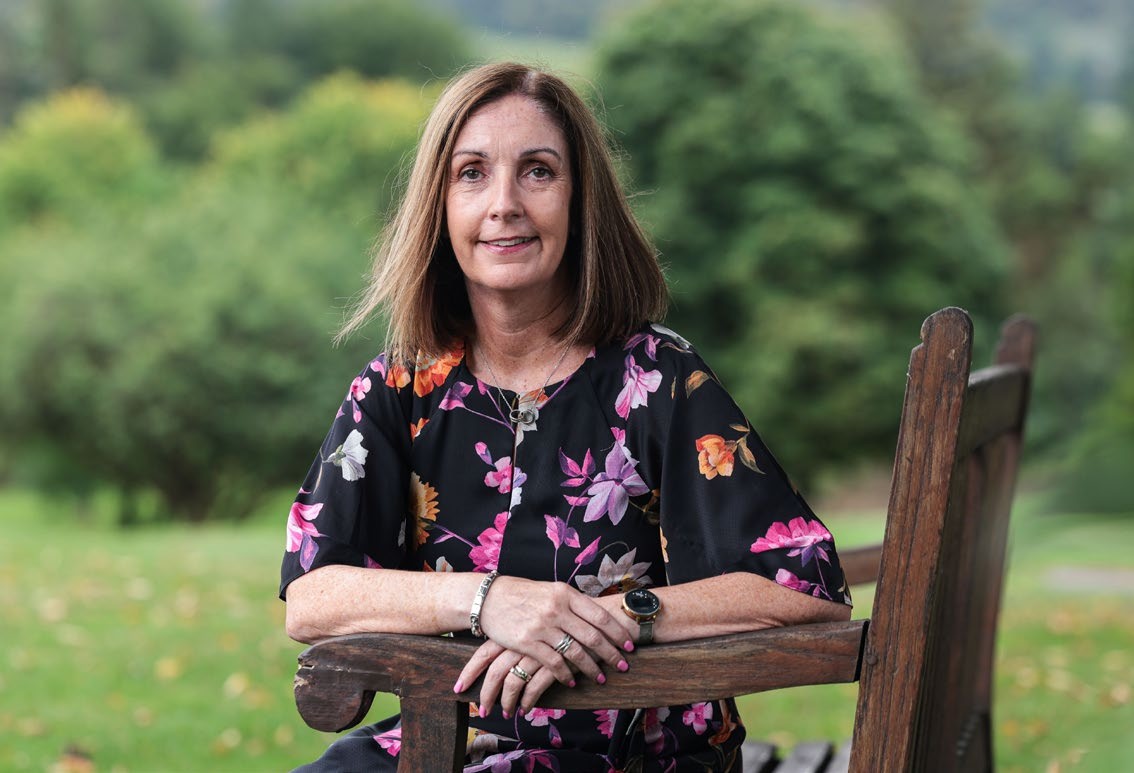
As a member of the Ulster Society’s Charity/Not for Profit Group, Craigan has contributed to its work supporting members working in the third sector through outreach and representation on key issues.
“I work with quite a few charities and non-profits in Northern Ireland’s third sector in my role with HM Chartered Accountants, so it made sense to join our Charity/Not for Profit Group,” she says.
“It has allowed me to share my expertise and knowledge with other members, and vice versa, so that we can support members working in the sector and be a voice for the sector on financial matters.
“We actively engage with stakeholders, including governments, policy makers, regulators and business groups on key issues.
“Earlier this year, for example, we came together to formulate our response to the Department for Communities’ public consultation on the Charities (Amendment) Bill and, in 2025, we carried out similar work in relation to Charities SORP 2026.”
An honour and a privilege
Craigan joined the Main Committee of the Ulster Society in 2020 and, prior to her election as Chair in June, served as both Vice Chair and Honorary Treasurer.
“Overall, I would say becoming actively involved in the Ulster Society has given me a very valuable awareness of what is happening right across the profession in Northern Ireland, in all sectors – from business and industry through to the public sector, the third sector and education,” she says.
“You develop a greater understanding of policy and regulatory developments, and the opportunities and challenges for the profession at all levels.
“The Ulster Society is an important voice for our profession in Northern Ireland. Getting involved means you can bring your voice to the table and represent other members in your field.”
Craigan describes her appointment as Chair of Chartered Accountants Ulster Society 2026/27 as “an honour”, noting, “I’ve always been proud to be a Chartered Accountant, and to be able to represent the profession in Northern Ireland in this role is a privilege.”
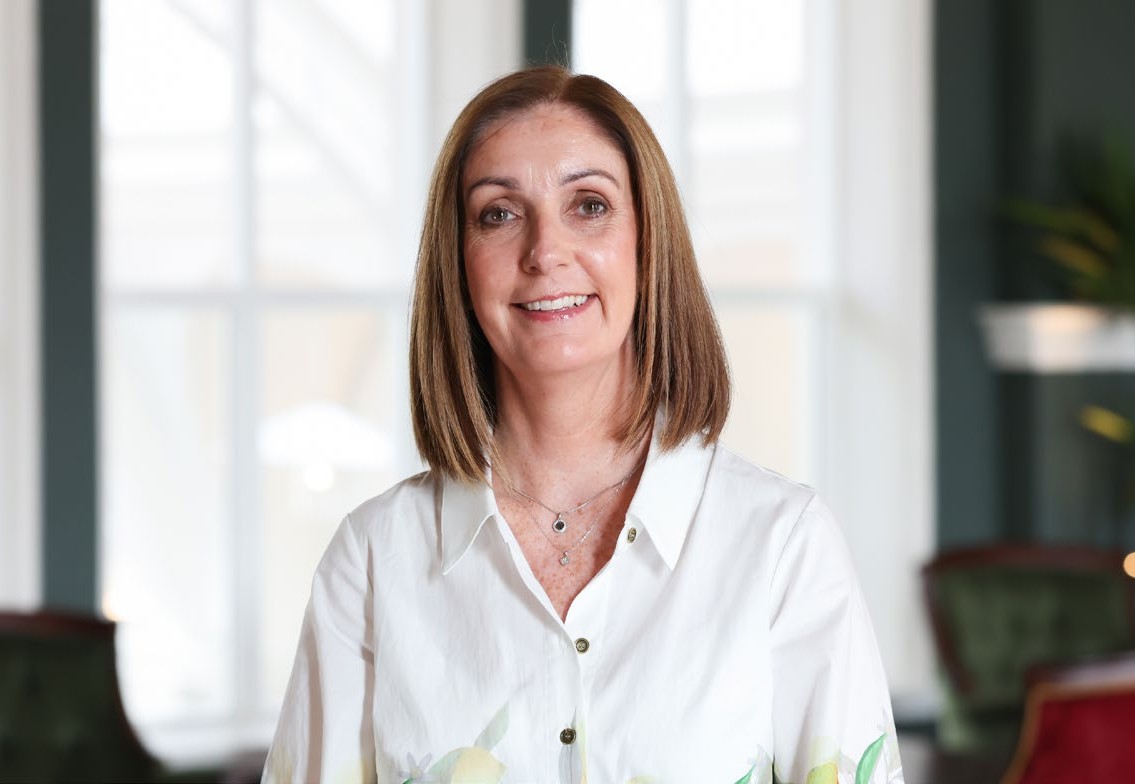
Originally from Moneyreagh, County Down, and now living in Comber, Craigan has worked with Belfast firm HM Chartered Accountants for the past 25 years, most recently in the role of Partner, Audit and Advisory.
“I have a wide range of clients. Many are locally owner-managed businesses, who are making and sustaining jobs, and others are charities and non-profits operating in Northern Ireland’s third sector, who are making a positive difference in our society,” she says.
“There is a lot of interaction with people – owner-managers, business leaders, chief executives and finance teams. Supporting these clients is very rewarding work.
“My first insight into business was my part-time job in the local shop growing up and I’ve never lost sight of the importance of good customer service.
“I might come into work with a plan for the day, but, if a client calls with a request, I will switch my focus to that. It means there is a lot of variety in my role and, for me, that’s another plus.”
Supporting Northern Ireland’s economy
During her term as Ulster Society Chair, Craigan is keen to highlight the important role Chartered Accountants play across the private, public and voluntary sectors, as trusted business leaders.
“Behind many of Northern Ireland’s success stories, you’ll find a Chartered Accountant helping to make things happen,” she says.
“I think our profession has an important role to play in supporting Northern Ireland’s economic ambitions and helping the region achieve its full potential.”
Figures published in September by the Northern Ireland Statistics and Research Agency (NISRA) show that the region’s economy is performing well this year.
NISRA’s latest Composite Economic Index found that economic output in Northern Ireland had increased by one percent in real terms over the quarter to June 2026, and by 2.3 percent over the year.
Both figures were higher than the UK equivalents of GDP growth of 0.4 percent over the quarter to June 2026, and 1.2 percent growth over the year.
“WE BELIEVE IN NORTHERN IRELAND’S POTENTIAL AS A PLACE TO INVEST AND GROW. WE WANT TO SEE A BOLD AND CREDIBLE ECONOMIC STRATEGY WHICH HELPS NORTHERN IRELAND BECOME A REAL SUCCESS STORY”
“Northern Ireland punches well above its weight; this resilience and determination are part of who we are,” Craigan says.
“The economy here is outperforming the UK. Our services sector continues to grow. We excel in cybersecurity, financial and global business services, such as aerospace technology and the television and film industry.
“Our operating costs tend to be lower than other western locations and we have the unique benefit of dual market access to the UK and internal markets within the European Union under the Windsor Framework.
“Dual market access and our growing high tech and manufacturing sectors are boosting our economy. We also benefit from having world-class local universities in both Queen’s University Belfast and Ulster University.
“This gives us a strong pipeline of graduates across technology, finance and the life sciences to support business growth and innovation in the region.”
Challenges remain, however. The latest Business Confidence Survey published in March by Chartered Accountants Ulster Society found that cost pressures remain a key challenge for members.
Ninety-five percent of respondents cited the rising cost of doing business as a major negative factor, alongside taxation, energy costs and wider public finance pressures.
Bold and credible economic strategy
A consistent theme throughout the findings of the Ulster Society’s latest Business Confidence Survey was the need for fundamental public sector reform.
Half of respondents (51%) believe Northern Ireland’s current public funding model is no longer sustainable and requires significant change.
Over 90 percent agree that improving efficiency and prioritising existing spending must come before raising taxes or cutting services.
The Business Confidence Survey also revealed strong support among respondents for measures that would enhance competitiveness.
Eighty-five percent believe a more competitive Corporation Tax rate would strengthen Northern Ireland’s ability to attract and retain mobile investment.
The Ulster Society has called on policymakers in Northern Ireland to take a long-term, strategic approach to economic growth by prioritising the acceleration of public sector reform, improving productivity, accountability and service delivery, enhancing competitiveness through Corporation Tax reform and maximising the benefits of dual market access.
“We believe in Northern Ireland’s potential as a place to invest and grow. We want to see a bold and credible economic strategy which helps Northern Ireland become a real success story,” Craigan says.
AI and the future of the profession
Looking to the future of the profession, Craigan is positive about the impact of artificial intelligence (AI) on the work of accountants.
“I think accountants will take on a more advisory role in the future, but the fundamentals of what we do will remain very much the same,” she says.
A position paper published by Chartered Accountants Ireland earlier this year highlighted the increasingly important role accountants will play as trusted business leaders, providing governance, ethical oversight and assurance in the AI economy of the future.
Published in May, An Empowered Profession – AI and the Future of Accountancy outlined how AI would reinforce the role of accountants in supporting robust, accountable decision-making.
Already, the profession is embracing AI, with global research carried out last year by Chartered Accountants Worldwide revealing enthusiasm for the technology within the profession.
Published in April 2025, AI and the Future of the Global Accountancy Profession surveyed over 2,700 Chartered Accountants, including 270 from Ireland.
Eighty-five percent of respondents expressed willingness to use AI tools and 91 percent of those aged 18-24 said they were already using the technology.
The research also found that eighty-three percent of respondents aged 18-to-24 use AI tools weekly – mainly for general productivity, data entry, reconciliation of accounts and financial reporting – and 45 percent overall say AI is already helping them to work more effectively and efficiently.
“Chartered Accountants already guide and support businesses and other organisations in our role as trusted business leaders. As AI automates more routine accounting work, we will take on a more strategic decision-making role,” Craigan says.
Her advice to young professionals starting out in their career today is simply: “seize every opportunity”.
“I have two children and I say to them, ‘if an opportunity comes your way, give it a go’. You will be surprised at what you are capable of, and learning from the people around you is often the best way,” she says.
“You can learn as much from your manager as you can from the person working beside you in the office doing a completely different job. Equally, I think it is important to put time and effort into growing your network to support your career growth and progression.”