“The consequence of good governance is that businesses are successful”
The expertise and oversight offered by non-executive directors holds strategic, reputational and commercial value for many organisations, says Helen Nolan, particularly at times of uncertainty
As organisations continue to grapple with geopolitical uncertainty and the ethical implications of artificial intelligence (AI), the importance of good governance is front of mind for many.
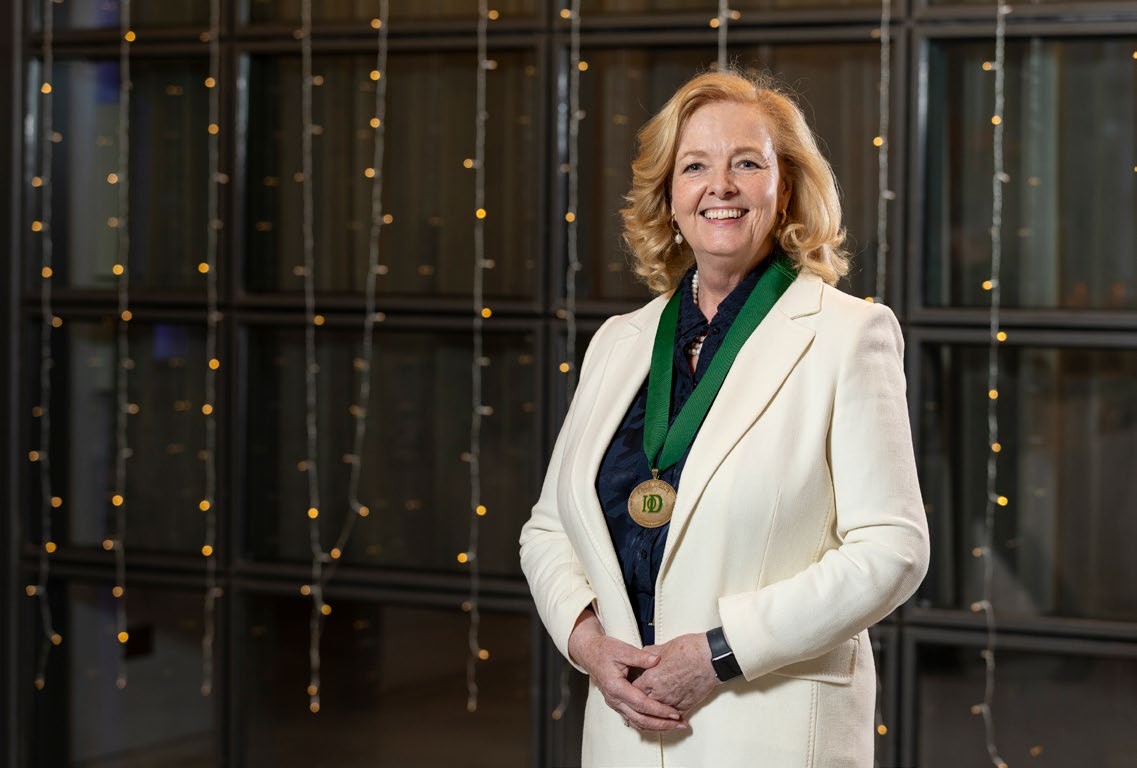
None more so than Helen Nolan, President of the Institute of Directors (IoD) Ireland and Chair of Aviva Life & Pensions Ireland DAC.
As Nolan sees it, a culture of strong and effective governance spanning all sectors is a crucial component of Ireland’s wider economic health, particularly at times of uncertainty.
“The consequence of good governance is that businesses and organisations are successful, and this supports the wellbeing of the Irish economy and society as a whole”, Nolan says.
Established in 1993, IoD Ireland offers education and accreditation, guidance and events for over 3,600 members, including board chairs, non-executive directors and c-suite executives.
The organisation’s vision is for Ireland to be an exemplar of corporate governance, Nolan explains. “We have a clear purpose to instil stakeholder trust and confidence in organisations by educating, informing and supporting directors to lead successfully”, she says.
Research carried out by IoD Ireland earlier this year revealed heightened economic and geopolitical concerns among members.
The IoD Ireland Risk and Business Confidence Survey Q2 2026, found that, while many organisations’ risk appetite remains steady, boards are embedding risk more firmly into decision-making.
Managing risk exposure
The IoD survey captured responses from 358 directors and senior business leaders who identified three areas in which boards now face greater risk exposure:
• Geopolitical and regulatory volatility (37%);
• Cybersecurity as a systemic business risk (26%); and
• Gaps in AI governance and accountability (19%).
Risk management appears to be well embedded in organisational decision-making, the survey found, with 73 percent of respondents reporting that it is either fully or mostly integrated into strategic decision-making.
At board level, strategic risk stood out as the area expected to require the greatest increase in attention over the next two to three years, ranked first by 51 percent of respondents.
“A key role of the board is to set an organisation’s risk appetite, which should then serve as a boundary to its strategy”, Nolan says.
Appropriate risk management strategies and frameworks should be introduced to ensure the organisation can be managed within its risk appetite.
“The uncertain environment we are operating in currently requires regular horizon scanning to assess any emerging risks or threats to business strategy or, indeed, emerging opportunities to be considered”.
AI oversight and governance
Another area requiring greater board oversight is the rising use of AI among businesses and other organisations in Ireland.
The findings of an IoD snap poll, completed by 378 members in March, found that 85 percent classify themselves as beginner- to intermediate-level users of AI tools such as ChatGPT and Microsoft Copilot.
Seventy-eight percent said AI was important or critical for competitiveness in their sector. Of these:
• 46% identified operational efficiency as the most immediate benefit; and
• 32% said AI would be essential for staying ahead of competitors.
As AI use continues to rise, it is important that directors seek to strengthen their understanding of the technology and related cybersecurity risks, supported by regulatory awareness, industry insight and structured assessments of organisational maturity.
“AI will be key to the competitiveness of organisations, both through innovation and cost competitiveness, so, from a board perspective, it is important to get the basics right before deploying AI”, Nolan says.
“This includes clarity on the strategy and business model, along with good processes, risk management and controls. Governance around AI, with appropriate guardrails, is critical for the protection of businesses, their customers and all stakeholders”.
Directorships: risks and responsibilities
Becoming a board director carries responsibility and risk. According to IoD Ireland’s most recent Risk and Business Confidence Survey, 91 percent of directors believe their personal liability and risk exposure has increased in the last three to five years.
“The decision to take on a non-executive role should never be taken lightly”, Nolan says.
“Before you decide to join a board, I would advise doing your due diligence on the organisation. Review its governance and financial documents, and Directors and Officers liability insurance.
“Take the time to meet with key people, including other board members, to assess the culture and how seriously governance is treated in practice”.
It is equally important to consider your own fit with the role. “Think about the time commitment required and your skills and experience”, Nolan advises, “you need to be able to understand the organisation well enough to effectively contribute to, and, when necessary, challenge its strategy”.
Executive leadership to board governance
Nolan’s announcement as President of IoD Ireland in May 2025 marked the culmination of a storied career spanning banking, governance and board appointments.
She qualified as a Chartered Accountant in 1981 with Stokes Kennedy Crowley & Co. (now KPMG) and went on to
work in Ireland’s pharmaceutical sector before progressing to life and pensions, followed by banking.
“My career roughly divides into three stages: financial, governance and non-executive”, Nolan explains, “looking back, some of the most significant career choices I made were driven more by curiosity to learn rather than by any ‘grand plan’.
“I decided to move into financial services, for example, because it was an exciting time to join an industry that was beginning to expand rapidly and because I felt that, as a Chartered Accountant, I could really contribute to a business that is financial in nature”.
In her executive career, Nolan progressed to senior roles with Bank of Ireland Group plc, including Group Secretary, Group Chief Internal Auditor and Divisional Finance Officer for the Wholesale Financial Services division.
“The opportunity to move from life and pensions into banking came in the late nineties when I was offered a secondment in Northern Ireland. It was a fantastic learning opportunity, which set me up really well for my future career”, Nolan says.
“Further down the line, becoming Group Secretary for Bank of Ireland Group plc provided a natural progression into board roles, and it was a wonderfully interesting role in itself”.
Nolan has been Chair of Aviva Life & Pensions Ireland DAC since mid-2024 and is also a non-executive director with both Companjon Insurance DAC and Dole plc, the US-listed fresh produce company.
“My transition from executive to non-executive was probably easier than most because I had worked with executives and non-executives and understood the difference between both roles”, she says.
“Like many Chartered Accountants, I had also worked closely with board audit committees and the second half of my executive career was heavily governance-focused”.
During this time, Nolan had the “privilege of seeing some highly effective directors and boards in action”.
“I understood the difference effective board governance can make to an organisation”, she says.
“The board’s responsibility to ensure the long-term sustainable success of a business or organisation requires a clear understanding of the strategy and business model, including its financial soundness”.
Non-executive directors: best practice
Good non-executive directors are typically prepared to commit the necessary time, energy and thought to ensure they understand the organisation on whose board they sit, and the environment in which it operates.
“Ideally, the opportunity to work with the organisation, its board and executives should excite you. This is important because you can expect to spend a reasonable amount of time with them”, Nolan says.
A good non-executive director will also be able to apply their experience and skills to test strategy by challenging underlying assumptions, thereby reducing risk for the board and organisation, and improving the likelihood of successful outcomes.
“THE OPPORTUNITY TO MOVE FROM LIFE AND PENSIONS INTO BANKING CAME IN THE LATE NINETIES WHEN I WAS OFFERED A SECONDMENT IN NORTHERN IRELAND. IT WAS A FANTASTIC LEARNING OPPORTUNITY, WHICH SET ME UP REALLY WELL FOR MY FUTURE CAREER”
“In my experience, really effective directors tend to have strong ‘soft’ skills, including the ability to challenge respectfully, listen to a range of views and collaborate and build on others’ contributions”, Nolans says.
“Ultimately, the board is responsible for the long-term, sustainable success of an organisation, balancing strong governance and oversight with the development of a successful business strategy”.
One of the best ways to gauge a board’s effectiveness is by its response to an unexpected challenge.
“It could be a cyber-attack, a wider economic jolt like the financial crisis of 2008 or something entirely outside its control like the COVID-19 pandemic a few years ago”, Nolan says.
“Very often, decisions have to be made with limited time and knowledge, which can be very uncomfortable”.
Strong leadership can make all the difference in such scenarios. “The ability to lead people to take on board all available advice and information – and bring everyone to the best decision possible at the time – is very valuable”, Nolan says.
“It is often the distinguishing feature of a business that comes through a challenge successfully”.