“Human interaction is so important – listening to people and encouraging feedback”
In his dual roles as Country Manager and Director of Trading for Bord Gáis Energy, John Dalton has honed a nuanced approach to effective leadership centred on transparency, adaptability and active listening
John Dalton’s recent appointment as Country Manager for Bord Gáis Energy comes at a significant time for the energy company, which marks 50 years in business this year.
With backing from its parent company, Centrica plc, Bord Gáis Energy is embarking on a €1 billion investment drive over five years, but it is a challenging time for the energy sector globally.
“The energy markets have been in a constant state of flux since the Russian invasion of Ukraine in 2022 and now, with the unrest in the Middle East, there is continuing uncertainty”, Dalton says.
“At the same time, the energy environment in Ireland is changing at a rate of knots and we are playing a major role in that change”.
Bord Gáis Energy currently has one gigawatt of energy generation in operation and development, including two gas peaking plants in Dublin and Athlone, with capacity to generate a combined 200 megawatts (MW), and the proposed 334MW Cashla Peaker Plant in Co. Galway.
“We have a very large infrastructure. Whitegate, our gas-fired power plant in East Cork, generates about 10 percent of the national grid’s total energy demand on any given day, and we plan to invest tens of millions of euros into that over the next five years”, Dalton says.
“Our peaking plants will provide security to the energy grid on those days when the wind doesn’t blow and the sun doesn’t shine. That’s important because, as we help customers to transition to renewable energy, we also have to consider intermittency. We will facilitate renewables and clean energy with gas”.
Renewable output to double by 2028
By 2028, Dalton says, Bord Gáis Energy will have more than doubled its renewable output to deliver close to one terawatt-hours of clean electricity per year, enough to power some 250,000 homes, through long-term power purchase agreements with wind and solar developers in Ireland.
Following the 2024 acquisition of Swyft Energy, a Cork-based solar company servicing the Munster region, Bord Gáis Energy completed some 1,000 solar PV installations in the first half of this year.
It is also working with ESB and dCarbonX on the planned Kestrel project to redevelop decommissioned gas reservoirs at the Kinsale Head gas field in Cork for large-scale green hydrogen energy storage.
“We talk about the energy trilemma: secure supply, affordability and sustainability, and it is important for us strategically to make sure we are meeting each of those needs on an equal basis”, Dalton says.
“With everything going on geopolitically, there is obviously a need to secure energy supply in the future, particularly as Ireland is still very reliant on imported fuels”.
Figures released by the Sustainable Energy Authority of Ireland in July revealed that just over 78 percent of the energy used in Ireland in 2025 comprised imported fossil fuels, compared to the European Union average of 57 percent.
“We currently only have one gas pipe between Ireland and the UK, and we don’t have any storage facilities, hence our involvement in the Kestrel Project and focus on subsea storage for offshore wind energy which will be the cornerstone of net zero in Ireland in the future”, Dalton says.
Energy affordability is another priority for Bord Gáis Energy in the midst of Ireland’s current cost-of-living crisis.
“We work with partners including MABS and Focus Ireland through our Energy Support Fund. We provide practical assistance to customers experiencing financial difficulty, to the value of €7.9 million since the fund was established in April 2022”.
In his role as Bord Gáis Energy’s Country Manager, Dalton is leading a business employing more than 500 people and serving over 715,000 residential and business customers.
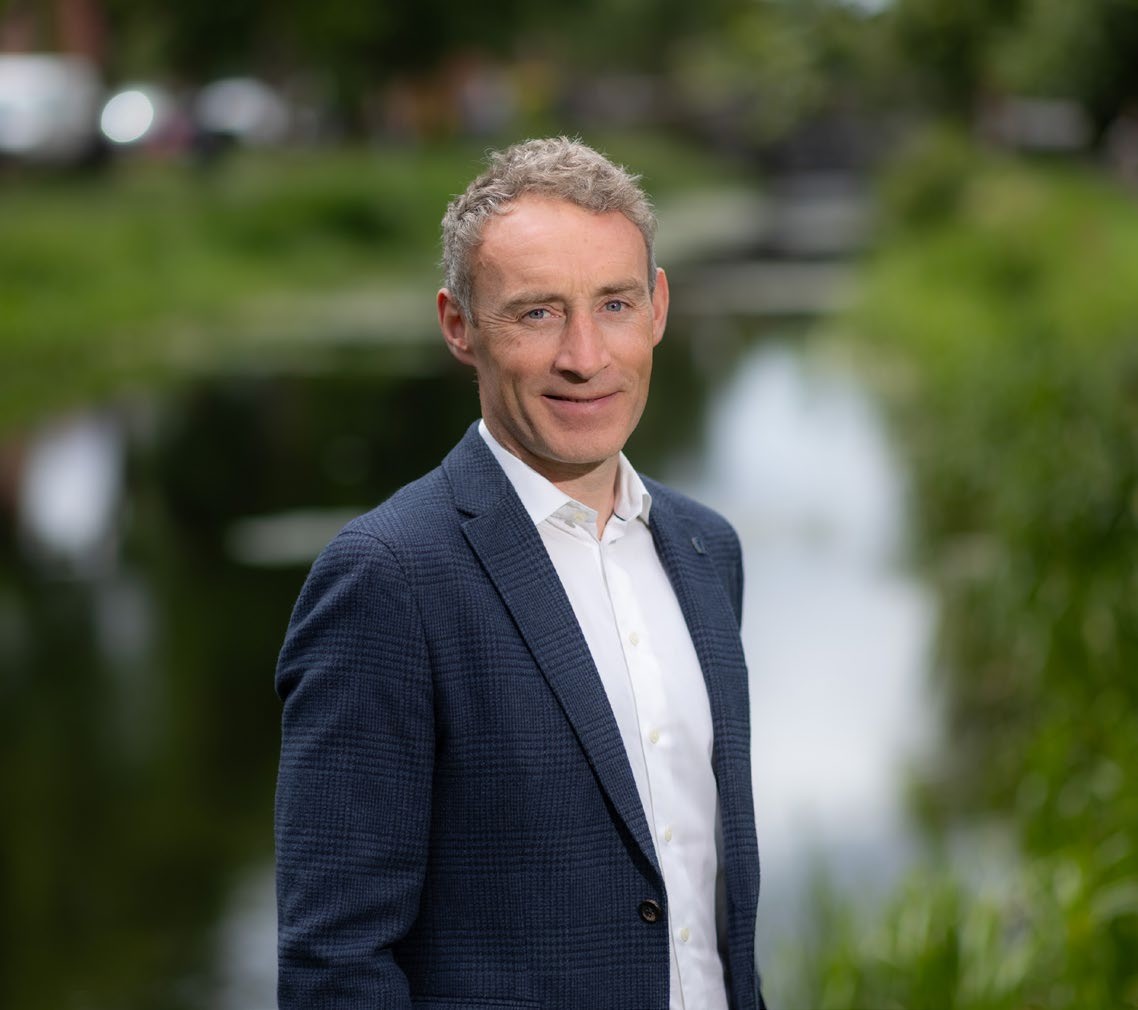
“A huge part of my role now is driving the best outcome for our customers, employees and stakeholders”, he says.
“It’s about facilitating the right conversations commercially to ensure our decision-makers across the organisation are making the right decisions for everyone.
“Everything we’re doing is about protecting customers. We are implementing robust hedging strategies to ensure we do our utmost to shield them from energy price spikes and short-term volatility.
“While we buy up to two years in advance, however, unfortunately no energy provider can shelter customers fully from sustained highs over a long period of time. That said, the energy market in Ireland is competitive and that does give people a level of assurance”.
Career plan and progression
Dalton’s path to Ireland’s energy sector began with a degree in business, economics and social studies from Trinity College Dublin followed by a master’s in finance from UCD Michael Smurfit Graduate Business School.
“I REALLY BENEFITED EARLY ON FROM THE CORE SKILLS I GAINED TRAINING IN AUDIT; LEARNING TO UNDERSTAND BUSINESSES, PROFIT AND LOSS STATEMENTS, BALANCE SHEETS AND HOW TO COMMUNICATE WITH PARTNERS AND SENIOR MANAGERS INTERNALLY, AND WITH CLIENTS EXTERNALLY. THOSE PEOPLE SKILLS ARE INVALUABLE”
He qualified as a Chartered Accountant with PwC in Dublin in 2008 and continued to work in the firm’s audit department for two more years before relocating to London.
“I remember vividly when Lehman Brothers went bust in the US in 2008. I was on-site with a client, a big European business, and one of the senior guys said to me, ‘the world has fundamentally changed’. From there, of the 250 trainees in my PwC intake, I would say 80 percent of us emigrated”.
Dalton relocated to London in 2010 where he got a job as Treasury Manager in the banking sector, before joining energy company Centrica in 2012 as a Proprietary Trading Accountant.
“My first job in London was in product control, managing daily P&Ls for fixed income traders, but I knew I wanted to work in energy so I started actively reaching out to people in the sector and chose to commute 30 miles from Highbury in North London to work with Centrica in Windsor”.
Two years later, Dalton was back in Dublin, following Centrica’s acquisition of the retail arm of Bord Gáis – then State-owned – for a reported €1.1 billion.
His first role with Centrica’s rebranded Bord Gáis Energy was Financial Planning and Analysis Manager.
“For the first time in my career, I was working in a customer-focused role, dealing with commercial teams interfacing with customers.
“It was a huge learning curve at the start, but I have a naturally entrepreneurial spirit; an innate curiosity. I want to be incrementally better today than I was yesterday; to keep learning all the time.
“I knew by the time I joined Bord Gáis Energy, that I would like to work outside finance. Moving into a commercial role was always the plan – but it was a huge leap.
“I am very analytical; a classic accountant. I love detail. I love being in the spreadsheet. Coming into that first commercial role, having worked across financial planning, analysis and control, I was suddenly no longer the expert.
“I have some really vivid memories of leading meetings with the Irish trading team and being the least knowledgeable person in the room, dealing with these amazing professionals with immense knowledge.
“That experience really changes your way of thinking. Your role becomes more about asking open-ended questions, building trust and nurturing strong relationships with your team and your direct reports.
“The analytical style of direct leadership serves many people in finance well but what I’m learning every day is the importance of broadening your skill set so you can always lead with the right kind of energy. Human interaction is so important – listening to people and encouraging authentic feedback”.
Open leadership and authentic communication
Less than a year after Dalton joined Bord Gáis Energy, he was promoted to Financial Controller, followed by Finance Director.
He became Chief Financial Officer in 2020, followed by Director of Trading in 2023 – a role he still holds today alongside his appointment as Country Manager at the start of the year.
An open communication style is central to Dalton’s leadership approach; something he has learned to value as his career has progressed from practice to more commercial roles in banking and the energy sector.
“I really benefited early on from the core skills I gained training in audit; learning to understand businesses, profit and loss statements, balance sheets and how to communicate with partners and senior managers internally, and with clients externally. Those people skills are invaluable”, he says.
“Then, when I joined Centrica, I felt immediately at home with the collaborative work culture I found there.
“I was working with cross-functional teams, where we were solving problems together and challenging each other to achieve the best outcome for the business. There was this clear expectation that, if you didn’t understand something, you would say openly, ‘I need you to explain it to me’”.
“I still value that openness and curiosity. Right across teams, I think everyone needs to share the same level of curiosity because everyone has a different lens they can apply to a problem to help deliver the best outcome”.
“I leave my diary open to everyone because I think a lot of trusted leadership comes down to availability and openness”.
Today, Dalton says, his approach is to “lead by influence”. “I always think back to a Partner at PwC who gave me some great advice when I was training”, he says, “and I think it’s something all accountants need to have in the back of their minds.
“I was explaining something to him one day, basically telling him everything I knew about the topic, and he stopped me and said, ‘before you came to me about this, you should have thought about the three questions I was most likely to ask you’.
“He was right and that was a key lesson for me early on. Now, when I’m thinking ahead to any communication with my team, our customers or other stakeholders, I focus on their perspective and the information that will be most valuable for them”.