“Women are not risk-averse when it comes to investing —we are risk-aware”
OwnIt Advisory’s Susan Kilcine is flipping the narrative that women aren’t natural investors, using coaching and community to instill a wealth mindset for financial empowerment
It was while attending an event at Euronext Dublin in 2024 that Susan Kilcine learned about Irish woman Oonah Keogh, who became the world’s first female stockbroker when she joined the Dublin Stock Exchange in 1925. Keogh’s historical achievement struck a chord with Kilcline, who had forged a successful career in practice, then business—first qualifying as a Chartered Accountant with PwC while completing a master’s in accounting— and then moving into strategic, commercial and sales leadership roles in the telecoms and technology sectors.
By the time she attended the Euronext event in 2024, Kilcline was working with Udemy and jointly leading the online learning platform’s Women at Udemy initiative as Global Co-Chair and EMEA Lead.
“Women at Udemy is a global community for the company’s female employees designed to help them connect, share experiences and support each other’s growth”, Kilcline explains.
“I was really noticing at the time that our participants kept asking the same questions about their personal finances—their financial power; and the fear and the weight they felt around that.
“Then, I looked around the room at Euronext and realised the vast majority of people there were men; where were the women? “We were there to hear about Oonah Keogh, the first female stockbroker in the world who had to fight for her right to be admitted to the Dublin Stock Exchange and, yet, a century on, I was thinking, ‘how much has really changed?’”
Supporting wealth-building for women Kilcline would go on to launch OwnIt Advisory in November 2025 to redress this balance, offering coaching and workshops designed to help women build sustainable money habits, define their financial goals and take control of their finances.
“I want to help women understand their financial position and wealth-building potential and ultimately take the fear out of finance for them—because there is a lot of fear, and this is a historical issue that is still impacting women today”, Kilcline explains.
“It was only in 1973 that the marriage bar was lifted in Ireland and women working in the civil service were allowed to keep their jobs after marriage, and only after that did the practice of requiring married women to get their husbands’ signatures to open a bank account gradually start to fade.
“Historically speaking, this is all pretty recent, and it impacts the ideas many women working today grew up with. Even now, we tend to talk to boys about growing wealth, whereas we talk to girls about saving”.
Kilcline is, she says, “hyper aware” of how these childhood conversations can go on to influence the way women understand their place in the world and the financial opportunities available to them.
“The wealth industry we have today has been mostly built by men, for men. The majority of people working in finance are men; the majority of financial advisers are men”, she says.
“They don’t necessarily speak the language we, as women, grew up with around financial power and opportunity—and that’s where OwnIt comes in.
“It’s about helping women realise their financial power. It’s not just about understanding their finances; it’s about learning to act without fear; the fear of taking a risk or making the ‘wrong’ decision”.
OwnIt offers a six-week coaching programme designed to help women build sustainable money habits, define their financial goals and take control of their finances.
“Our focus is on providing clear, practical frameworks to drive behavioural change around how women view their finances and help them build simple, actionable plans for their future”, Kilcline explains.
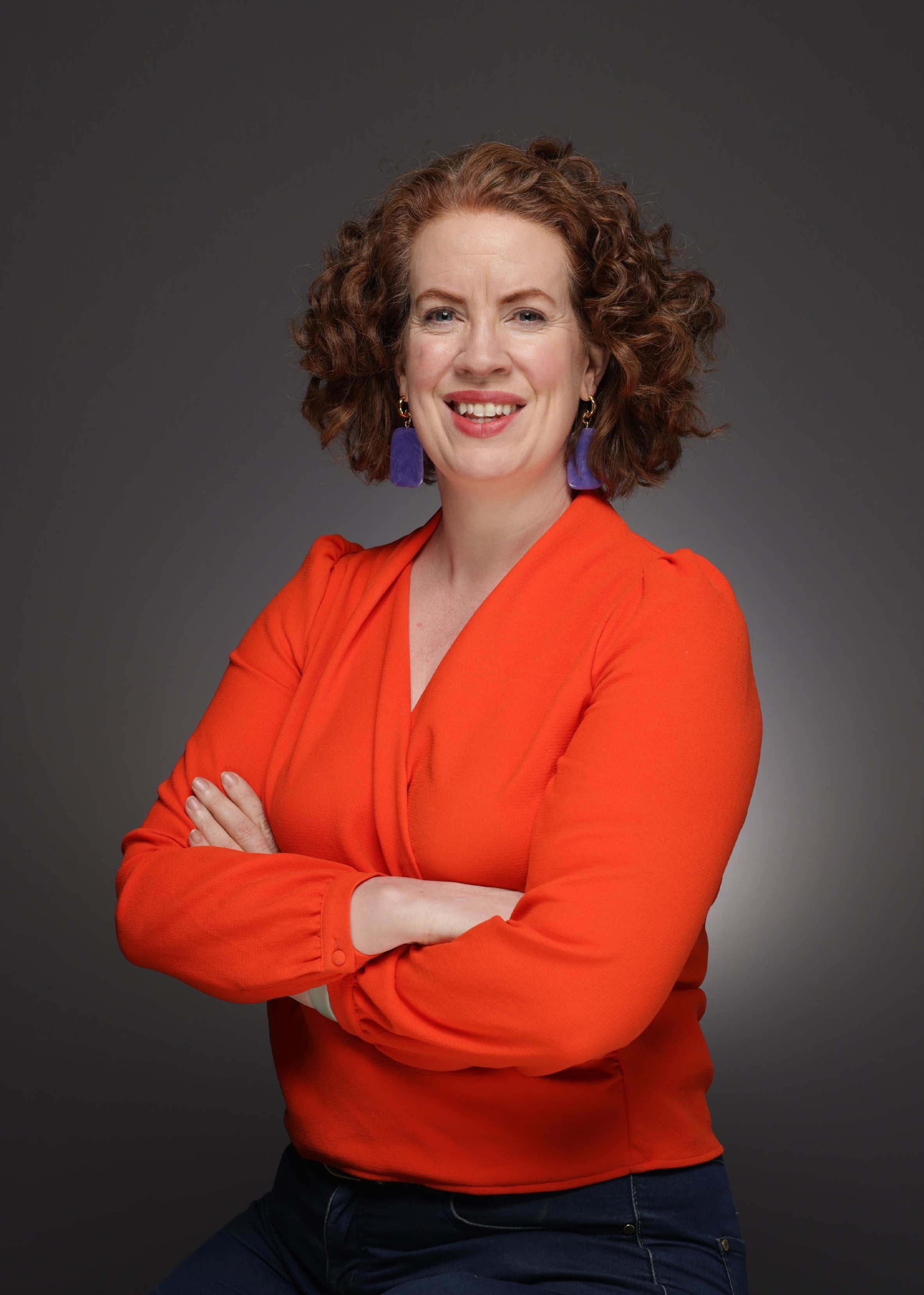
Small decisions compound over time
The OwnIt programme focuses on small decisions that compound over time—particularly around investing, pensions, career progression and big financial transitions.
“OwnIt is a community-led programme aimed at driving behavioural change and putting women in control of their finances. We bring women together at the outset for a kick-off event and, again, at the end of the course”, Kilcline says. “They are encouraged to connect with each other via online groups over the course of the programme —to share questions, advice, worries—and, ultimately, help and support each other”.
The OwnIt course is designed to be as low-impact as possible, she adds; “Participants watch just one weekly 45-minute recorded session and we then ask them to do small 10-minute tasks—micro actions, such as simply logging into their pension, for example.
“That’s it. The idea is to help them overcome any ingrained ‘fear or freeze’ response they might have to the idea of personal finance, and learn enough to take control of their financial future and understand the choices they have and the personal empowerment this represents”.
In addition to these six-week programmes, Kilcline also offers employee workshops for corporate clients, and has worked with Accenture, VHI and the not-for-profit Women for Excellence.
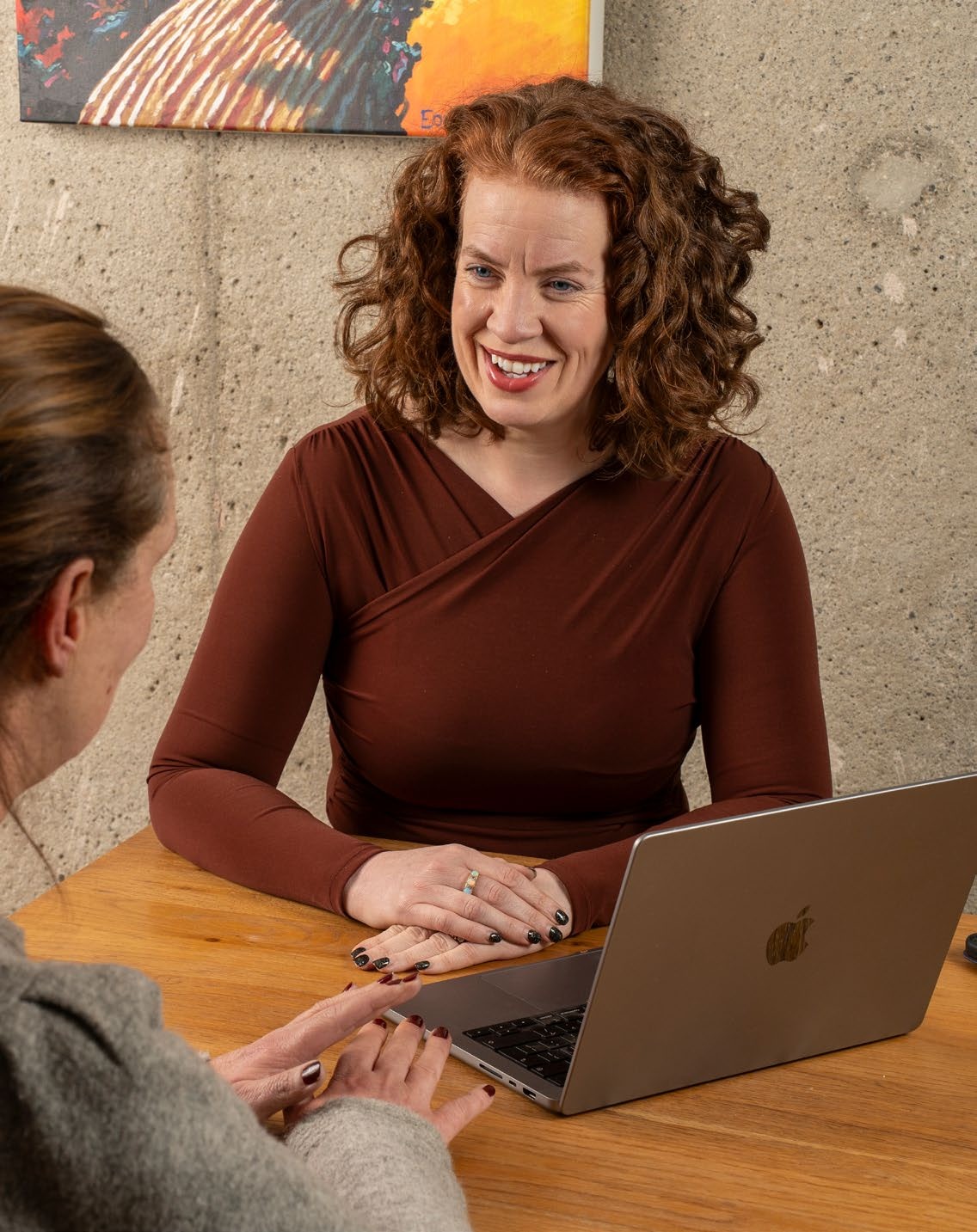
“THERE IS A NARRATIVE OUT THERE THAT WOMEN ARE NOT GOOD INVESTORS BECAUSE WE ARE INHERENTLY RISK-AVERSE AND IT IS ONE OF MY BIGGEST BUGBEARS. WE ARE, IN FACT, GOOD INVESTORS, AND STUDIES HAVE SHOWN THIS”
“My vision is simple; I want to close the wealth gap that exists today between women and men”, she says.
“There is a narrative out there that women are not good investors because we are inherently risk-averse and it is one of my biggest bugbears. We are, in fact, good investors, and studies have shown this”.
Research carried out by Warwick Business School, for example, found that women investors outperform men by 1.8 percent.
Published in 2018, the analysis of 2,800 investors found that the annual returns on the investment portfolios held by participating women over three years were 1.94 per cent above the performance of the FTSE 100 in that time, compared to 0.14 per cent among participating men.
“Women are not risk-averse when it comes to investing; we are risk-aware, and that actually makes us better investors because we are consistent”, Kilcline says “We make measured investment choices and we commit to them, delivering better returns on compound growth over time.
Yet, a lot of women have absorbed the message from an early age that they are just ‘not good at investing’—at accumulating personal wealth or making big financial decisions.
“None of it is true”, Kilcline says, “We are very good at all of these things and, by overcoming the fear that has been instilled in us, we can start to use financial planning to prioritise our future selves, as we should”
Career path to entrepreneurship
Kilcline studied business at Dublin City University and went on to qualify as a Chartered Accountant with PwC in 2006, completing the Master of Accounting programme at UCD Michael Smurfit Graduate Business School during her training, with support from the firm.
From there, she decided to move from practice to business to pursue a more commercially focused career.
“I don’t think I fully realised when I first decided to become a Chartered Accountant how impactful it would be”, she says.
“I knew accountancy was respected, safe—a solid career. I loved seeing the world through numbers, but I don’t think I understood then that this profession actually gives you something incredibly powerful.
“As a Chartered Accountant, you get to see things most people don’t. You see how senior leaders operate, how decisions show up in black and white—in the numbers.
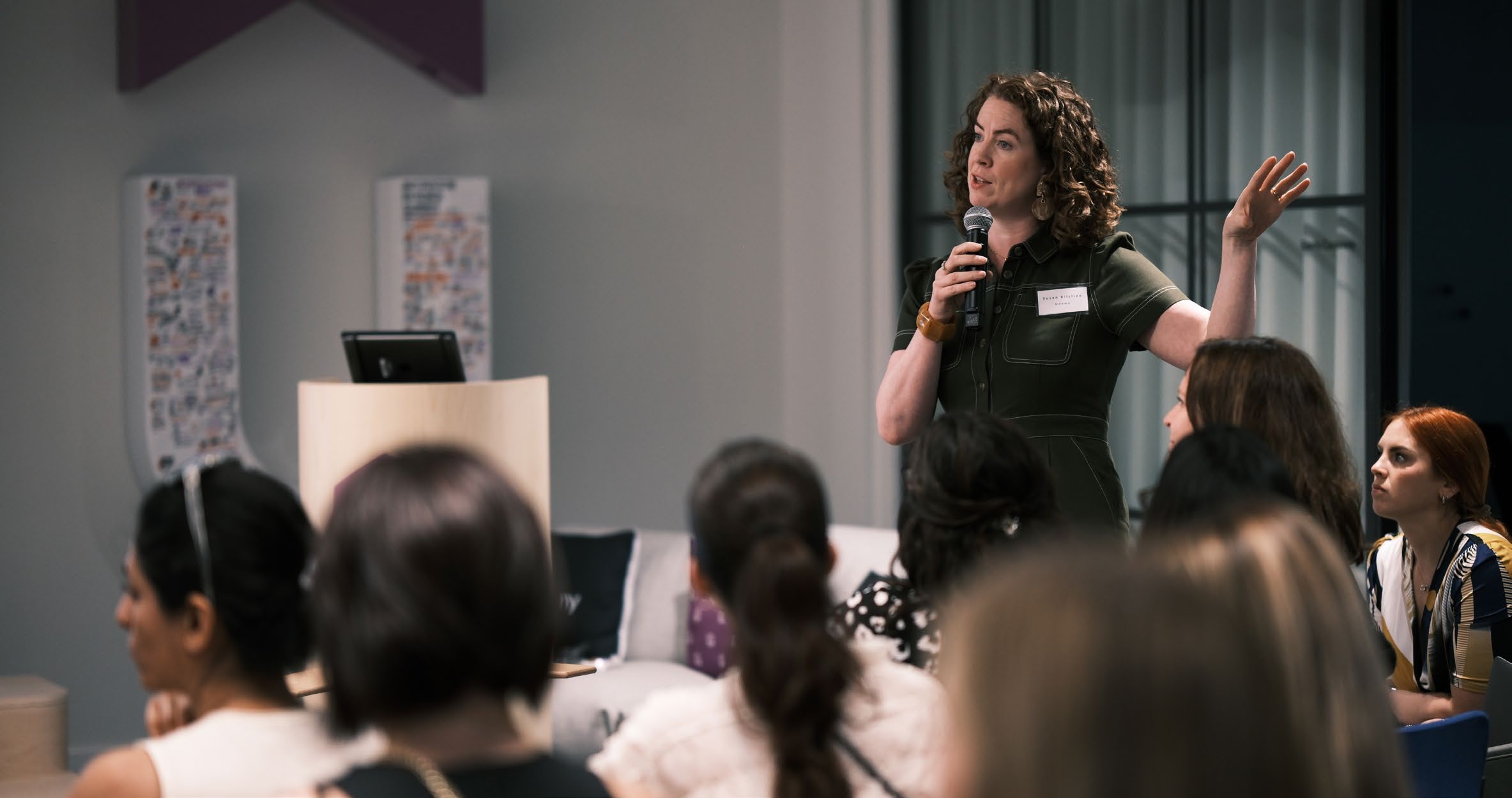
“From a very early stage in your career, you’re starting to figure out what actually drives business outcomes—the talent, strategy and decisions behind business performance.
“When I was training with PwC, I worked with technology companies, food producers and charities.
“I learned how to ‘read’ a business and how to read people, and realised I wanted to use my training to move closer to the decision-making part of business—to be involved in strategy and planning.
Kilcline joined Telefónica in 2007 to work in commercial planning and, from there, she moved to LinkedIn in 2013, where she led strategy and operations teams before joining Udemy in a senior commercial role in 2021.
“I think people are sometimes surprised to find a Chartered Accountant working in sales leadership, but, to me, it makes complete sense”, she says.
“Sales is about people and numbers; leaders want to know what return decisions will deliver and how these decisions will impact their people.
“Being a Chartered Accountant meant I could translate the sales strategy into business outcomes and numbers. It was like a superpower a lot of traditional sales leaders don’t have”.
Kilcline launched OwnIt after returning to UCD Michael Smurfit Graduate Business School to complete a diploma in executive coaching.
“I think the idea for OwnIT has been building throughout my career without me knowing it”, she says.
“When I look back and reflect, I can see clearly how each of the skills I learned along the way have brought me here, from accounting and strategy to sales and marketing in the tech sector.
“I had noticed again and again over the years that I was surrounded by these incredibly talented women—ambitious, capable, inspiring women—who were doing amazing things in their careers and for the people around them, but they weren’t prioritising themselves, and especially not their own finances”.
Global vision for OwnIt community
Kilcline has ambitious plans for the future of her fledgling venture. “OwnIt is just starting out, but I’m building something that’s mine”, she says.
“I am backing myself for the first time, and that’s very empowering for a woman because we don’t have enough female entrepreneurs.
“What I’ve enjoyed most so far is just seeing women connect with each other through OwnIt and sharing tips.
“That is where the real long-term change will come—from creating a community in which women can connect and empower each other.
“Ultimately, as we grow, I want to scale OwnIt into more community-led programmes in other regions beyond Ireland”.