“People’s words and actions have power—and that power can be used for the better”
A deep drive to make positive change in the world has helped shape a vibrant and fulfilling career for Aisling McCaffrey, Just Transition Programme Lead with the Impact Investing Institute
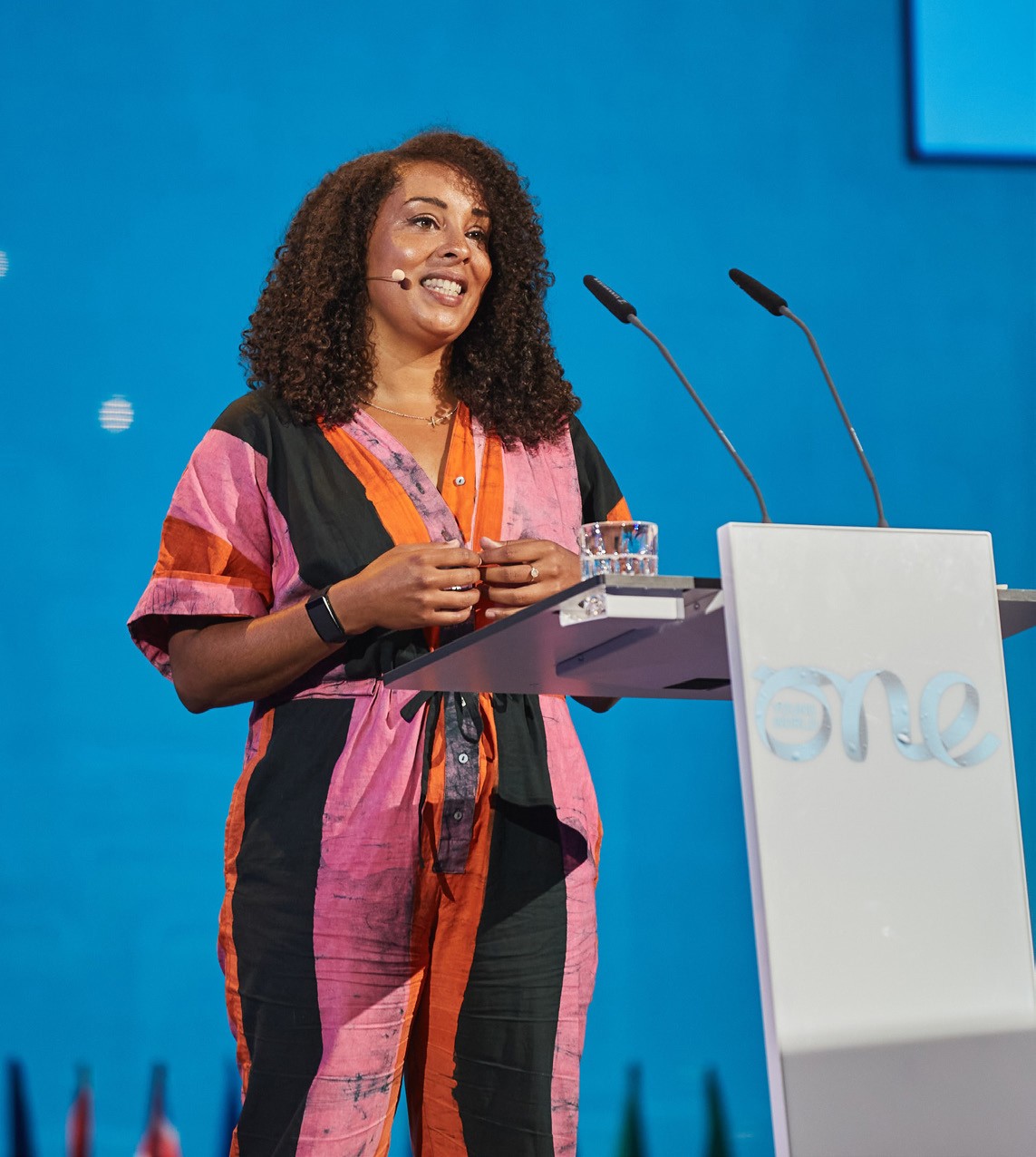
Aisling McCaffrey grew up in Holywood, Co. Down, and studied actuarial science and financial studies at University College Dublin (UCD) before qualifying as a Chartered Accountant with Grant Thornton (GT) in 2016.
McCaffrey remained with the firm in Dublin for a further nine years, progressing up the ranks to become Director, Sustainability Advisory, in 2023.
She decided to relocate to the UK in early 2025 and joined the Impact Investing Institute in the role of Just Transition Programme Lead.
McCaffrey is also currently Chair of Global Action Plan Ireland, Board Trustee for Business to Arts, co-founder of the Green Team Network and London Chapter Lead for the Climate Cocktail Club.
McCaffrey is a former co-Chair of both Chartered Accountants Ireland’s Ethnicity Network and the 100 Women in Finance Early Career Committee.
Q Why did you decide to become a Chartered Accountant? What were your expectations starting out?
At school, I never really knew what I wanted to do. Maths was one of my strongest subjects, and through the advice of a career advisor, I decided to study actuarial and financial studies at UCD. However, my second choice was Irish Music and Dance at the University of Limerick!
I enjoyed my time at UCD, but towards the end of the course, I didn’t feel like actuarial science was the right path for me. I felt a little bit restricted.
I also had a strong interest in humanitarian and development work sparked by some volunteering experiences I really enjoyed, so I was considering what else I could do in this space.
I took a year out and during my time off, spoke to lots of fantastic people working in a range of different sectors, from non-governmental organisations (NGOs) to corporations.
The main advice I was given was to focus on enhancing my skill set and building on what I had learned to understand how I could be most effective and then take it from there.
I determined that Chartered Accountancy was the right choice because it would allow me to gain valuable business knowledge and technical skills, opening up a wide range of opportunities both in Ireland and abroad. I started my training contract with GT in 2013.
Q Did you have a career plan at the outset? What were your early ambitions and how have they evolved since?
In all honesty, my main focus at the outset was passing my exams, doing my job well and learning as much as possible!
I was ambitious but quite short-term in my goal setting (next exam, next promotion, etc). At that stage, I still wasn’t sure what the bigger picture looked like for me.
I took each role and project as an opportunity to learn more about myself, what I liked and what I was good at, to help shape how to move forward. This allowed me to stay open to opportunities with GT and ultimately gave me the skills and confidence to evolve to where I am today.
I think it’s important to say here that both my past role as Sustainability Advisory Director, and my current role with the Impact Investing Institute didn’t exist when I was at college, proving you can’t plan for everything!
Q How have your personal values and priorities informed your career choices?
On reflection, I think my personal values have been the key driver behind my career choices.
As I said, I never had a clear idea of what I wanted to “be,” but I had a strong sense of purpose from a young age. My grandmother encouraged me to understand how I could best contribute to society and support those less fortunate.
In every role I have had, I’ve tried to appreciate the bigger picture and the impact of my actions. I found this helpful in making decisions on where to go next.
Q How was your experience relocating from Dublin to London and finding your feet in a new city?
I’ve been quite lucky to land in London with a great support network, so it has been a relatively smooth transition.
Alongside friends and family, groups like the Chartered Accountants London Society have helped build connections.
On paper, it probably looks like a big jump from working with a global accountancy firm to a non-profit team of 15, but I am really enjoying the opportunity to use my skills in a different environment to drive systems change.
Q Tell us about your current role as Just Transition Program Lead with the Impact Investing Institute: what attracted you in the first instance?
My current focus is on the Institute’s goal to mobilise institutional capital for a transition to net zero, where no one is left behind.
This means that, when people are financing activities to support the transition—alongside considering climate and environmental action—they also consider factors related to socio-economic equity and distribution, and the integration of community voice. In practice, my role is to:
• Raise investor awareness and commitment to the just transition through a community of practice;
• Bridge knowledge gaps by developing sector-specific guidance and engaging communities; and
• Develop tools like the Just Transition Criteria to help investors create products supporting a fair and inclusive transition to net zero.
I was attracted to the role because I felt it would allow me to use my skillset to help address systemic issues on a global scale.
The impact Investing Institute is an independent, non-profit organisation established in 2019 to help transform capital markets, so they support a fairer, greener and more resilient future.
We come up with innovative solutions to help private finance address societal challenges, and we grow the field of impact investing by building expertise across financial markets.
Q What does your work involve day-to-day? What do you find most fulfilling?
My days are pretty varied—there is no such thing as a standard day!
At the moment, I am working on some research to understand how we can unlock investor action to support a just transition in the fashion sector in India.
This involves interacting directly with impact investors to understand their motivations for investing in this sector.
I’m also speaking with people in organisations, such as Fashion Revolution, International Labour Organisation and Good Business Lab, to overlay other perspectives centred on workers’ rights and community needs.
The most rewarding part is hearing about the incredible work underway in this space, and exploring ways to direct the flow of finance towards enhancing positive impact and potential systems change.
Q Among the people you have worked with over the years, who has inspired you? What did they teach you?
There is a very long list of people who have inspired and supported me throughout my career. I could probably write a book about it!
Some have guided me practically in developing my skills, and even more, have mentored me and served as advocates in rooms I haven’t been in.
Women such as the fantastic Sinead O’Donovan, a recent past President of Chartered Accountants Ireland, have served as key visible role models as I have continued to navigate the world of financial services.
Some of the biggest breakthrough moments in my personal development have come from one singular conversation. I think it is important for people to recognise the power of their words and actions, and use that power for the better.
Q Who do you admire most in business or public life today—why?
I recently had the opportunity to meet one of my heroes: the incredible Mary Robinson.
To me, she is the ultimate representation of someone who has lived their purpose and values and is still using her influence to try to enact positive change in the world today.
Mary Robinson has the ability to make you feel that you are part of something much greater. She inspires me to do better.
Q Your own career is focused on making a positive impact on the world—do you think Chartered Accountants have an important role to play here?
Chartered Accountants are in a unique position of power. We work with businesses across a wide range of sectors, providing financial and strategic advice and assurance. We are regarded as trusted advisors. There is a significant opportunity for our profession to shape sustainable business models where factors such as climate risk and social impact are embedded into strategy, and measured, monitored and assured.